
From the Puna to your hands
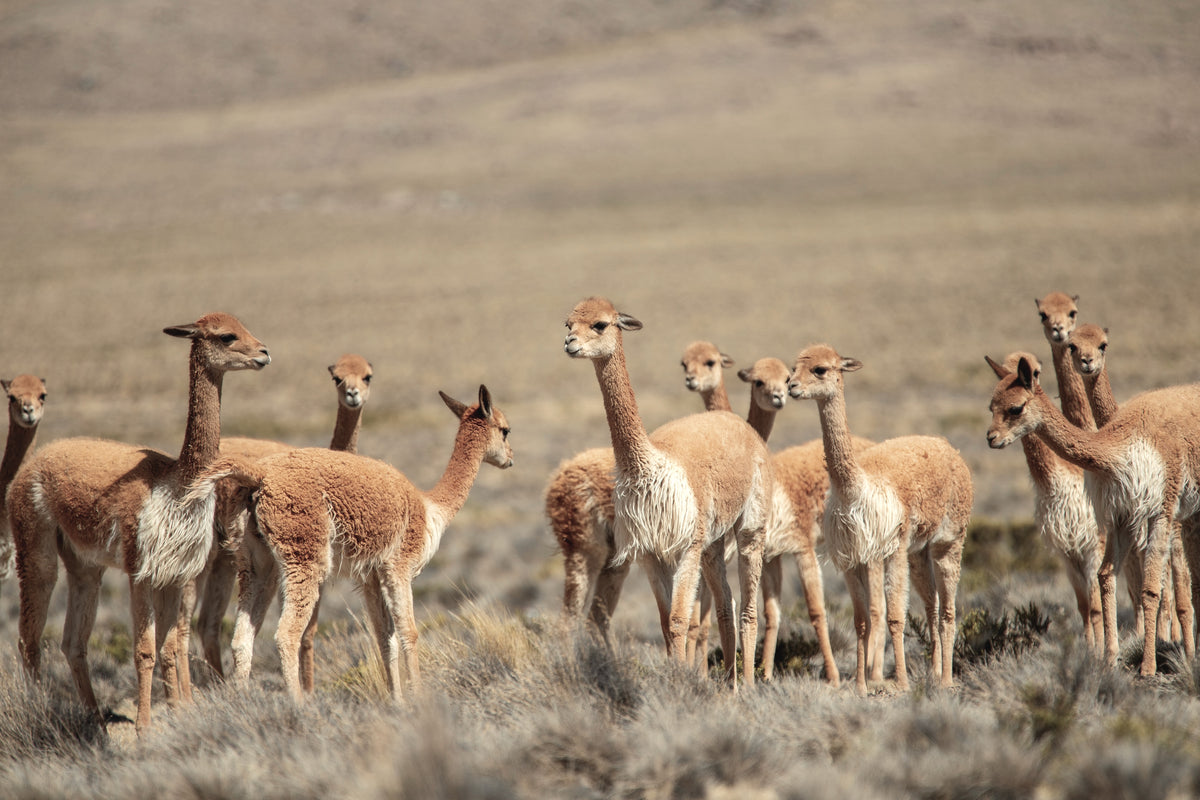
The vicuña is a wild animal. It lives at elevations of over four thousand meters in the Peruvian Andes, in small family groups, roaming freely across the Puna, the vast grasslands of the highlands. Its fiber is among the finest in the world, and at the same time one of the most strictly protected. Before it becomes a garment, it travels a long path, and every step is documented.
In the Puna
Once a year, the communities of the highlands gather for the Chaccu. In a long chain, men, women and children walk across the grassland, gently herding the vicuñas into a temporary enclosure. The tradition dates back to the time of the Incas. Today, the Chaccu takes place under state supervision.
Only animals with fleeces long enough are shorn. All the others immediately return to the puna. The shorn animals are also free again after just a few minutes. A vicuña yields only a few hundred grams of fiber, and only every few years.
Weighed and registered
Still at the site of the chaccu, the fiber is weighed and recorded for each community and each season. This keeps every batch linked through its documents to the community it came from. The communities retain the rights to the herds and sell the fiber themselves. They protect the vicuñas all year round, helping ensure that the animals now roam the Andes once again in large numbers.
Fiber becomes yarn
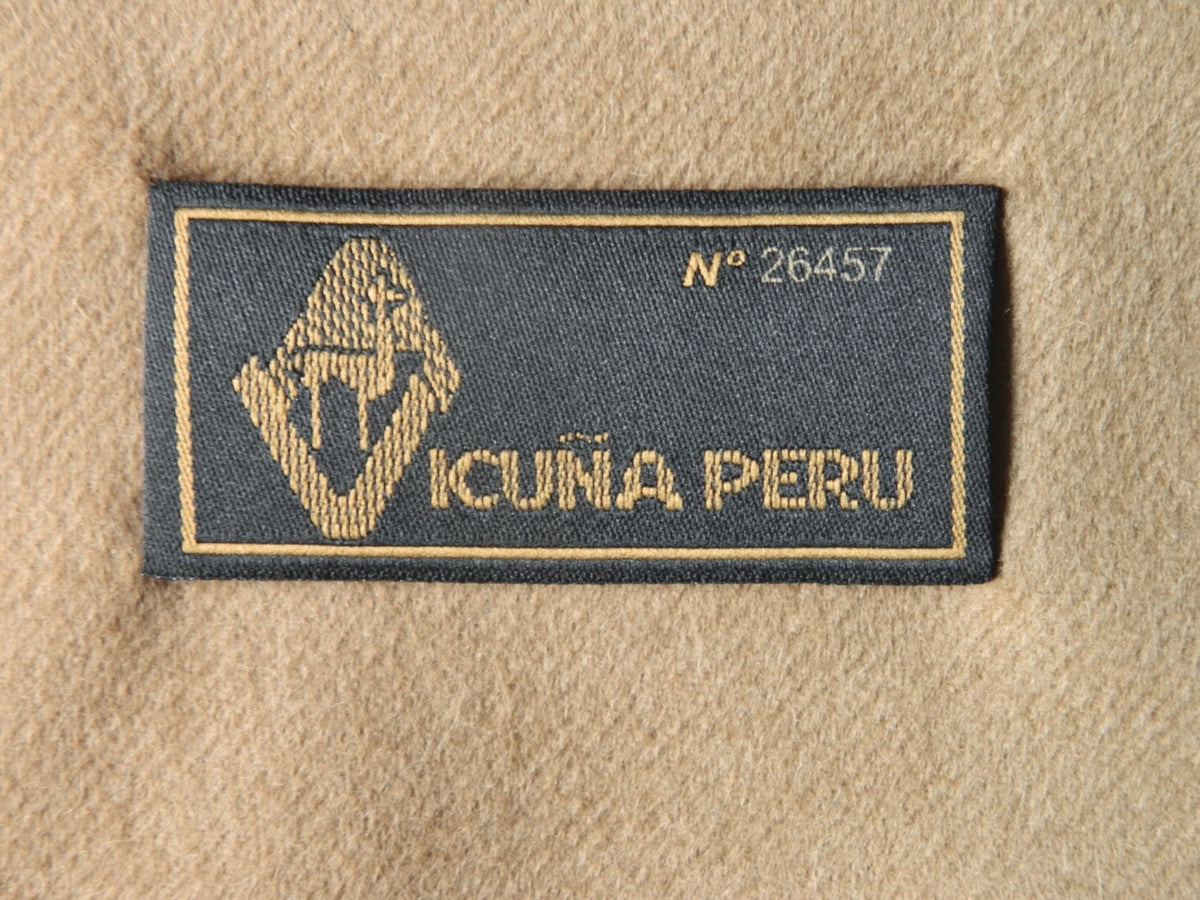
In Peru, the fiber is sorted, cleaned and spun by hand. Anyone processing vicuña fiber needs authorization from its country of origin. Fabrics made from Peruvian vicuña bear the words “VICUÑA PERÚ” in the selvedge. This keeps the origin visible in the fabric itself.
A vicuña yields only a few hundred grams of fiber, and only every few years.
The journey to Europe
The vicuña is protected under the Washington Convention on International Trade in Endangered Species of Wild Fauna and Flora (CITES). Every export from Peru therefore requires its own CITES permit. In Germany, importation also requires a permit from the competent nature conservation authority, which must be obtained before the goods arrive in the country. Customs will release the shipment only once both documents have been verified as matching.
What remains
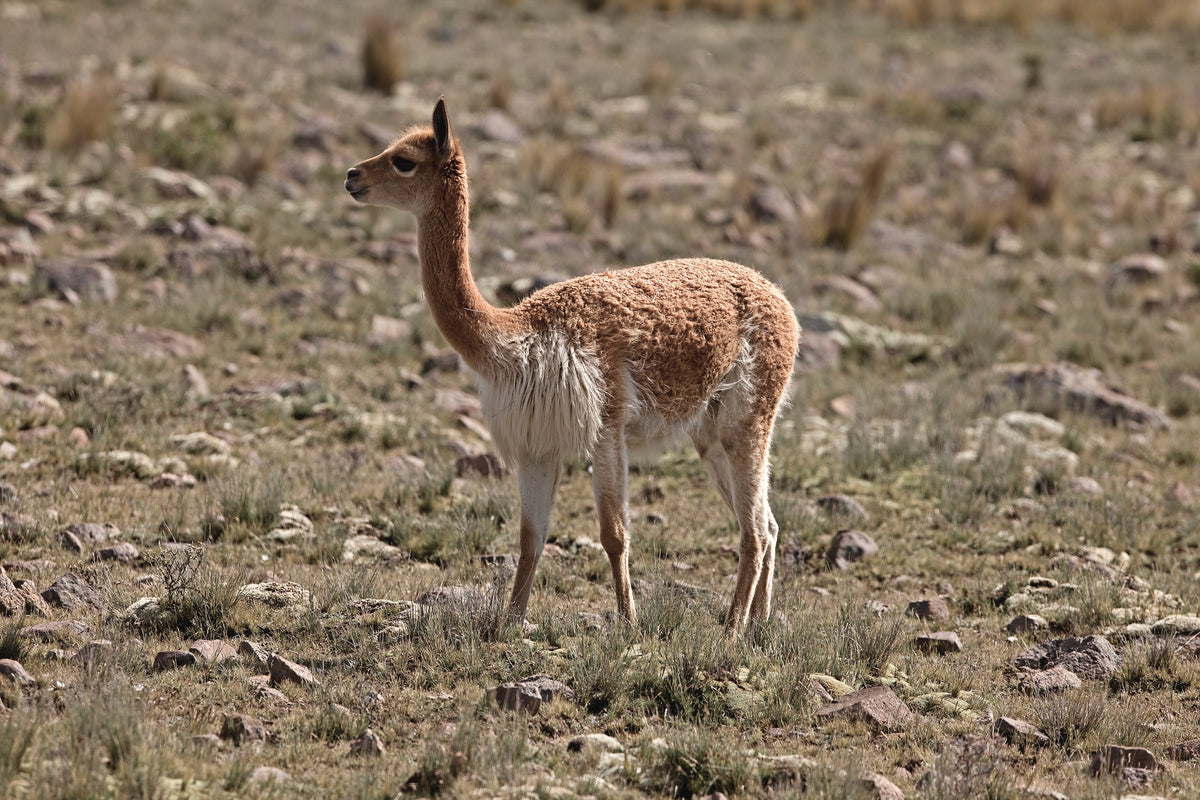
At APUKAI, every piece of vicuña is assigned a batch number. It links the piece to the documents that trace its origins: from the chaccu in the highlands, through processing in Peru, to its arrival in Europe. Whoever holds it in their hands also holds this journey.